I usually plan trips for great experiences. I couldn’t, however, plan for how this trip touched my soul. The night before I visited the Sheldrick Wildlife Trust, sleep felt impossible. Like a child on Christmas Eve, excited about what tomorrow brings. It was the anticipation of a rare and intimate meeting with elephants that kept me up. All of whom were rescued and each carries a remarkable story worth telling.
Before stepping into this haven for elephants, I researched the process, and this is what I learned. You need a reservation to enter. You must book in advance and can not simply walk in. The public visit starts promptly at 11 am. Arriving early is key, no later than 10:30 am.
The Trust’s official website is a treasure trove of details, making the booking process smooth and clear. You can pre-book using the contact form on the Official website.
In your message, state:
You will receive an email with a confirmation including your booking reference number, booking name, and date of visit.
You will need to pay two separate fees. One to the Kenya Wildlife Service (KWS) National Park via ecitizen, second is a cash donation to the Sheldrick Wildlife Trust. Below are the steps in an easy-to-read and follow format.
Step 1: Secure Your Sheldrick Wildlife Trust Appointment
Public visits are strictly by appointment, daily from 11:00 AM to 12:00 PM except for December 25th. Booking are made online via the contact form on the Official website.
You provide details such as those seen below.
In your message, state:
Step 2: Pay the KWS Nairobi National Park Entry Fee
The Sheldrick Wildlife Trust is inside Nairobi National Park, accessible via the Mbagathi Gate.
Book and pay park fees online via eCitizen:
Kenyan Adults: KES 430 | Non-resident Adults: USD $43
Kenyan Children: KES 215 | Non-resident Children: USD $22
Receipts are emailed instantly for verification at the gate.
Since you pay for the National Park, why not enjoy it after visiting the elephants?
Step 3: Prepare Your Donation to the Sheldrick Wildlife Trust (Cash Only)
Kenyan Adults: KES 2,000 | Non-resident Adults: USD 20
Kenyan Children: KES 500 | Non-resident Children: USD 5
Step 4: Arrive Early
You must be in by 10:30 AM as the elephants don’t wait for latecomers.
Opting for public transport, I started my day early to avoid delays. For visitors without private vehicles, the park provides a jeep to ferry you from the gate to the nursery. The short ride was breezy and thrilling, offering a taste of the adventure ahead.
At the lobby, I met fellow visitors from all over the world. The waiting area was warm and welcoming history boards chronicled the Trust’s mission, while comfortable seating made the pre-show moments relaxing.
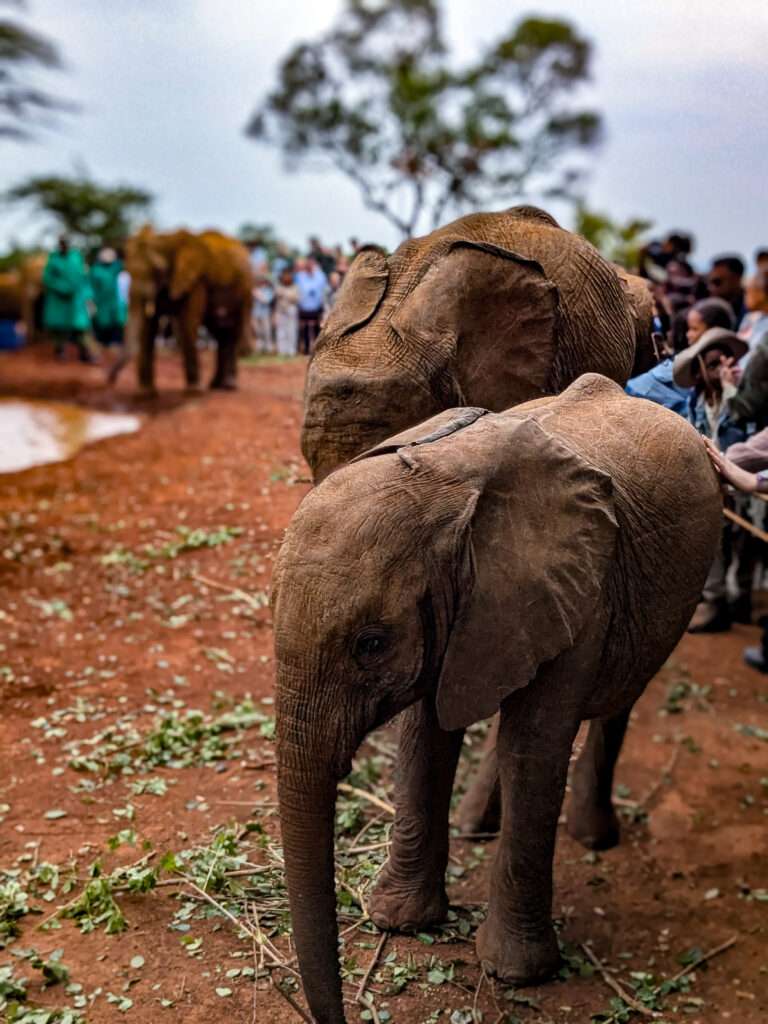
At exactly 11:00 AM, we were led to the mud bath viewing area, roped off for safety but close enough to feel the elephants’ presence.
From the distance, they appeared one by one, escorted by their keepers, walking with a regal calm. Each was greeted with four liters of specially formulated milk, a life-saving recipe created by the Trust’s founders for orphaned calves.
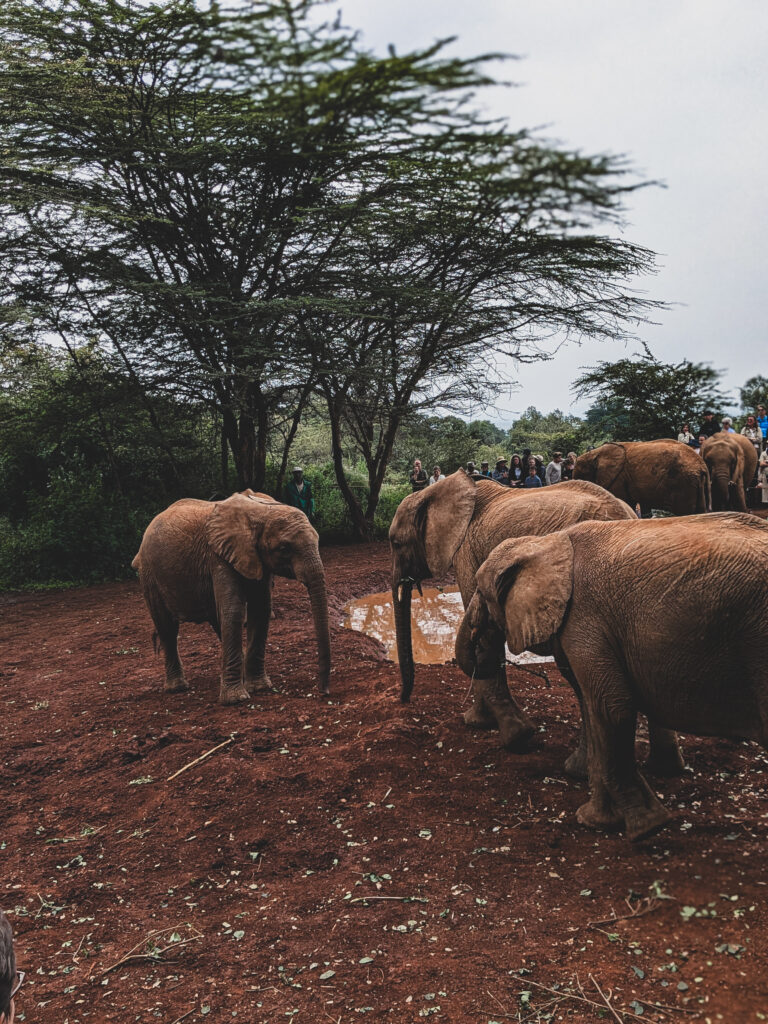
Every elephant has a past.
Some were rescued after being trapped in a human-wildlife conflict. Others had lost their mothers to poaching or drought.
Their stories ranged from deeply moving to powerfully inspiring tales of survival that left me humbled and wondering if humans could learn a thing or two about loyalty and kindness from these giants.
The hour flew by as they splashed in mud, played with each other, and occasionally looked over at the crowd as if acknowledging our presence.
It was more than entertainment; it was a moment of connection. A reminder of why conservation matters.
If you ever find yourself in Nairobi, make time for the Sheldrick Wildlife Trust. You’ll leave with memories etched deep in your heart and perhaps, like me, with a renewed sense of responsibility to protect the wild.
We included the sheldrick Wildlife trust in one of our videos.