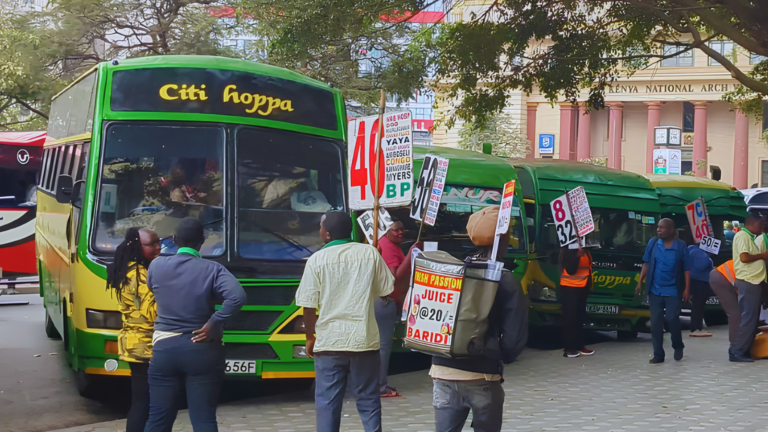
For most Kenyans, riding a matatu is simply part of everyday life. It’s how people get to work, school, the market, or visit friends. Ask almost anyone who grew up in Kenya, and they’ll have countless matatu stories. They’re everywhere, and for millions of people, they’re the country’s most important way of getting around.
Visitors usually see them differently. A matatu is often one of the first things that catches your eye in Nairobi, with its colorful artwork, booming music, and conductors calling out destinations from the open door. While many tourists choose taxis or ride-hailing apps, taking a matatu offers a glimpse into everyday Kenyan life that you simply can’t get from the back seat of a private car.
Not every matatu is a flashy nganya, though. The most elaborately customized vehicles, with their bold murals, LED lights, and powerful sound systems, tend to run on specific routes that have become famous for matatu culture. They’re part of what makes Nairobi’s public transport scene so unique.
In this guide, we’ll show you everything you need to know before riding a matatu in Kenya, from understanding fares and finding the right route to local etiquette, safety tips, and the vibrant culture that has made matatus a true Kenyan institution.
If you spend even a day in Kenya, chances are you’ll ride a matatu or see hundreds of them on the road. They’re the country’s most common form of public transport, carrying a huge share of Kenya’s daily commuters between neighborhoods, towns, and cities.
A matatu is a privately owned minibus that follows a fixed route while picking up and dropping off passengers along the way. Most operate as licensed Public Service Vehicles (PSVs) and typically seating 14 to over 30 passengers depending on the vehicle.
The name “matatu” dates back to the early 1960s, when the standard fare was three ten-cent coins. In Kikuyu, this was known as mang’otore matatu, meaning “three ten-cent pieces.” The nickname stuck and eventually became the name for Kenya’s entire minibus industry.
What began as an informal alternative to the colonial bus system has grown into the backbone of public transport in Kenya. Along the way, matatus also became a symbol of Nairobi’s street culture, with many vehicles transformed into colorful works of art featuring bold murals, music, and pop culture icons.
Did You Know? Although matatus are now an essential part of daily life in Kenya, they weren’t officially recognized as legal public transport until 1973. Basic licensing and inspection rules were only followed in 1984, after the industry had already become the country’s primary way of getting around.
This is probably the biggest question first-time visitors have. The honest answer is yes, but with some caution.
Government travel advisories also encourage visitors to take extra care when using public transportation because of road safety and petty crime concerns. These are valid concerns and shouldn’t be ignored.
That said, millions of Kenyans rely on matatus every day without any problems. Like many forms of public transport around the world, the biggest risks are usually linked to specific situations, such as overcrowded vehicles, late-night travel, and busy boarding areas where pickpockets may operate.
If you stick to daytime travel, choose a well-known route, avoid overcrowded matatus, and keep your valuables secure, riding a matatu is generally a safe and rewarding way to experience everyday life in Kenya.
Before and during your ride, keep these tips in mind:
Unlike buses or trains, matatu fares aren’t fixed. Prices vary depending on the route, traffic, time of day, weather, and demand. As a general guide, short trips within Nairobi usually cost KES 30 to 100, while longer journeys cost more.
| Route Type | Typical Fare Range | Notes |
|---|---|---|
| Short intra-city hop (e.g., CBD to Westlands) | KES 30–100 | Rises during rush hour and rain. |
| Medium intra-city (e.g., CBD to Rongai, Kasarani) | KES 50–150 | SACCO and route dependent. |
| Nairobi to Nakuru | KES 400–900 (shuttle); more for executive coaches. | Fill-and-go shuttles vs. scheduled buses. |
| Nairobi to Narok (Maasai Mara Gateway) | Varies by SACCO and vehicle type. | Confirm same-day fares at the stage. |
| Nairobi to Embu | Varies by SACCO and vehicle type. | Confirm same-day fares at the stage. |
Notes: Fares on this table are indicative only and change often due to fuel prices, weather, road construction, and seasonal demand (school openings, holidays, and weekends tend to push prices up). Always confirm the fare with the conductor before you sit down, and don’t hesitate to ask a fellow passenger nearby what they’re paying if something feels off.
Most matatus now accept M-Pesa, Kenya’s mobile money service, with a Paybill, Till Number, or Pochi la Biashara number displayed inside the vehicle. Many conductors prefer M-Pesa because it eliminates the need to carry change. Watch our video below to learn more about it.
Cash is still widely accepted, especially on some older matatus, so it’s a good idea to carry a few small notes as a backup.
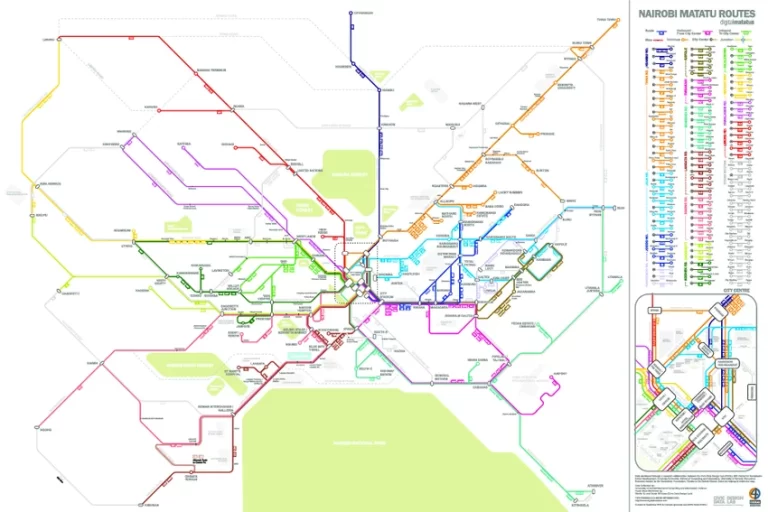
Nairobi has more than 100 Matatu routes, each identified by a route number and serving specific parts of the city. You don’t need to memorize them all. Once you know your destination, it’s simply a matter of finding the correct boarding stage.
| Destination Area | Where to Board |
|---|---|
| Westlands / Parklands | Koja Stage (near Odeon Cinema), or Ambassador/Archives Stage |
| Rongai / Ongata Rongai | Railways, Bomas Interchange, or Nakumatt Galleria Stage |
| South B / South C | Vus Station, Railways, or Nyayo Stage |
| Kasarani / Githurai / Thika Road | Tea Room or Muthurwa Area |
| Kayole / Umoja / Embakasi | Tea Room Area or Odeon |
| Destination Area | Where to Board |
|---|---|
| Nakuru | Tea Room Stage or Nyamakima (Mololine and other shuttle operators) |
| Narok (gateway to the Maasai Mara) | Tea Room area; confirm current SACCO stage on arrival |
| Embu | Tea Room Stage |
| Nyeri / Kiambu | Latema Road / Accra Road area |
| Mombasa | Accra Road area (though most travelers use scheduled coaches or the SGR for this route) |
| Kisumu | Railways Station area |
| Machakos / Kisii / Buonga / Busia | Machakos Country Bus Stage or Afya Centre |
Note: Matatu boarding stages can change as SACCOs reorganize their routes. If you’re unsure where to catch your matatu, ask your hotel, a boda boda rider, or a local before you head out.
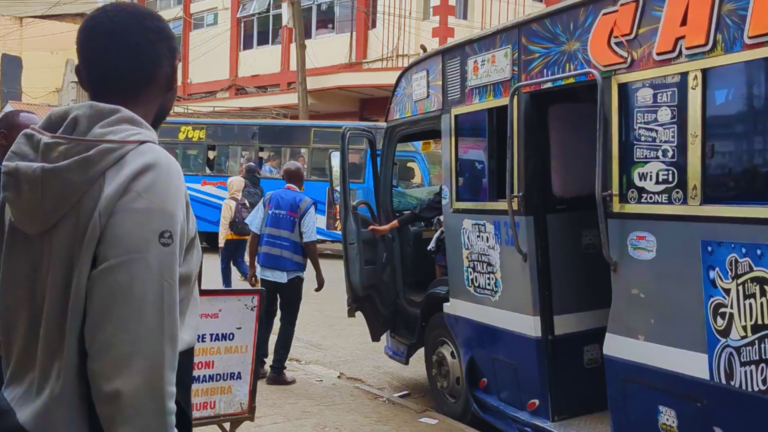
Like any form of public transport, matatus have a few unwritten rules. Knowing them will help your ride go more smoothly.
Avoid these common mistakes to make your first matatu ride much smoother:
A matatu is more than just a way to get around. It’s also one of the most recognizable symbols of Kenyan street culture.
The most eye-catching matatus are known as nganyas. These heavily customized vehicles feature colorful murals, LED lights, powerful sound systems, and sometimes even TV screens. Many celebrate musicians, athletes, and pop culture icons, turning an ordinary commute into something unforgettable.
Not every matatu is a nganya, though. They tend to operate on specific routes, with Thika Road, Rongai (Route 125), Embakasi (Route 33), and Umoja among the areas best known for their vibrant matatu culture. Owners often compete to create the most impressive designs, while playlists featuring Gengetone, drill, gospel, and other Kenyan music keep the atmosphere lively.
| Sheng Term | Meaning |
|---|---|
| Makanga / Manamba | Conductor |
| Dere / Pilot | Driver |
| Mathree / Mat | Matatu (Nganya specifically refers to a heavily customized matatu) |
| Debe | Sound system |
| Shukisha | "Let me off!" (used to signal your stop) |
| Sasa | Casual greeting meaning "What's up?" |
Did You Know? The colorful nganya culture has become so iconic that many visitors now seek out these customized matatus as an attraction in their own right, not just a way to get from one place to another.
Can I pay for a matatu with M-Pesa? Yes. Most matatus, especially in Nairobi, now display a till number, Paybill number, or Pochi la Biashara number for M-Pesa payments, and many conductors prefer it over cash. Cash is still widely accepted as a backup.
What are the best matatu routes for tourists? Short, well-known Nairobi routes, like CBD to Westlands, are the easiest starting point. Longer routes such as Nairobi to Narok (for the Maasai Mara) or Nairobi to Embu are commonly used but require more planning around current stages and fares.
How do I know where to get off a matatu? Tell the conductor your destination when you board so they can flag your stop, and pay attention to landmarks yourself. Matatus don’t announce every stop by name.
Can tourists bring luggage on a matatu? Small bags are fine on your lap or at your feet. Larger luggage is better suited to inter-town coach services or a private transfer, since matatus have limited storage and can get very crowded.
What is a nganya? A nganya is a heavily customized matatu (bold murals, neon lighting, big sound systems, sometimes flat-screen TVs) that’s become a recognizable symbol of Nairobi youth and street culture.
What are matatu operating hours? Most matatus run from early morning (around 5–6 a.m.) into the evening, with far fewer vehicles operating late at night. Late-night travel by matatu is generally discouraged.
Riding a matatu is one of the most immersive, unfiltered ways to experience daily life in Nairobi, but it’s just one piece of planning a trip to Kenya. Once you’ve ridden one, you’ll understand why matatus are much more than public transport. They’re part of Nairobi’s rhythm, equal parts commute, culture, and community. If you’re comfortable stepping outside the usual tourist path, a daytime matatu ride might become one of the most memorable experiences of your trip.
Watch our full companion video above for a look at the ride in action, browse more Roam-A-Zing travel guides for what to do once you’ve arrived, or book a travel consultation call with our team if you’d rather have the logistics (routes, fares, safety calls, and all) handled for you. Ask about our 24-Hour Travel Planning Package if you need a complete Kenya itinerary built fast.
Explore the beauty of the world with Roam-A-Zing Travel. We dive into culture, food, and the best tips and tricks for your next trip.
Join our community of global readers who receive emails filled with news, promotions, and other good stuff.
2024 Roamazing. All rights reserved.